If A is the path connected CW complex and X is the new CW complex made by attaching a single 1-cell, is it true that the fundamental group of X is the same as that of A?
I've tried to justify this via a proof I made but i'm not sure it's correct.
The 1-cell is isomorphic to the unit interval, so can treat X as $A\cup I$
Let $C=A \cup (0,\frac 34)$ and $D=(\frac 14 ,1)$ which are open subsets of X, $C \cup D=X$ and $C\cap D$ is path connected.
Then apply van Kampen to get $\pi_1(X,\frac 12)\cong\pi_1(C,\frac 12)*\pi_1(D,\frac 12)$ because N is trivial. But C deformation retracts to A and D is contractible so $\pi_1(X,\frac 12)\cong\pi_1(A,\frac 12)$.
Please correct my proof if it's wrong, currently I only know what is the equivalent of chapter 0 and 1 of Hatcher's book, so I don't know anything about homologys.

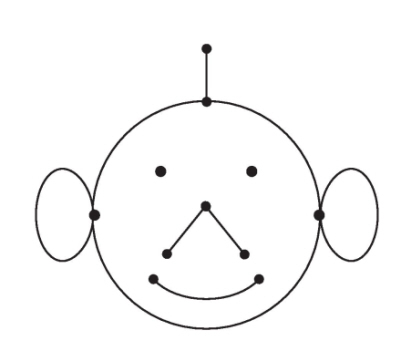
Let $X$ be a path-connected topological space , and $f:(S^{n-1},p)\rightarrow (X,x_0)$ continuous and let $Y=X\cup _f e^n$ be the space obtained by attaching $e^n$ via $f$. Then
If $n\geq 3$ then the inclusion $X\hookrightarrow Y$ induces an isomorphism between $\pi _1 (X,x_0)\cong \pi _1 (Y,x_0)$.
If $n=2$ then $f$ defines an element $[f]\in \pi _1 (X,x_0)$ and $\pi _1 (Y,x_0)=\pi _1 (X,x_0)/[f]$.
If $n=1$ and $(X,x_0)$ is a correctly pointed topological space then $\pi _1 (Y,x_0)=\pi _1 (X,x_0)*\mathbb{Z}$.
Correctly pointed means there exists a neighbourhood $U$ of $x_0$ and a homotopy $H:V\times I\rightarrow V$, satisfying $H(x,0)=x$, $H(x,1)=x_0$ and $H(x_0,t)=x_0$ for all $t\in I$.
The theorem you should remember about attaching cells, proof uses Van Kampen (version from Félix, Tanré).