The straight skeleton of a polygon can be computed by having the edges of the polygon move inwards at a uniform constant speed.
Is it useful to generalize this computation process by varying the speeds at which the edges move inward? That is, every edge will move at some nonzero speed of its own, which could even be negative. Has the "generalized straight skeleton" generated from this algorithm been studied before?

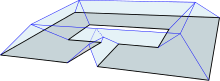
It seems that these are called weighted straight skeletons. I'm not sure where they were introduced; it might be this article, "Raising Roofs, Crashing Cycles, and Playing Pool: Applications of a Data Structure for Finding Pairwise Interactions". Here's a blog with pretty pictures: http://twak.blogspot.com/2011/01/degeneracy-in-weighted-straight.html