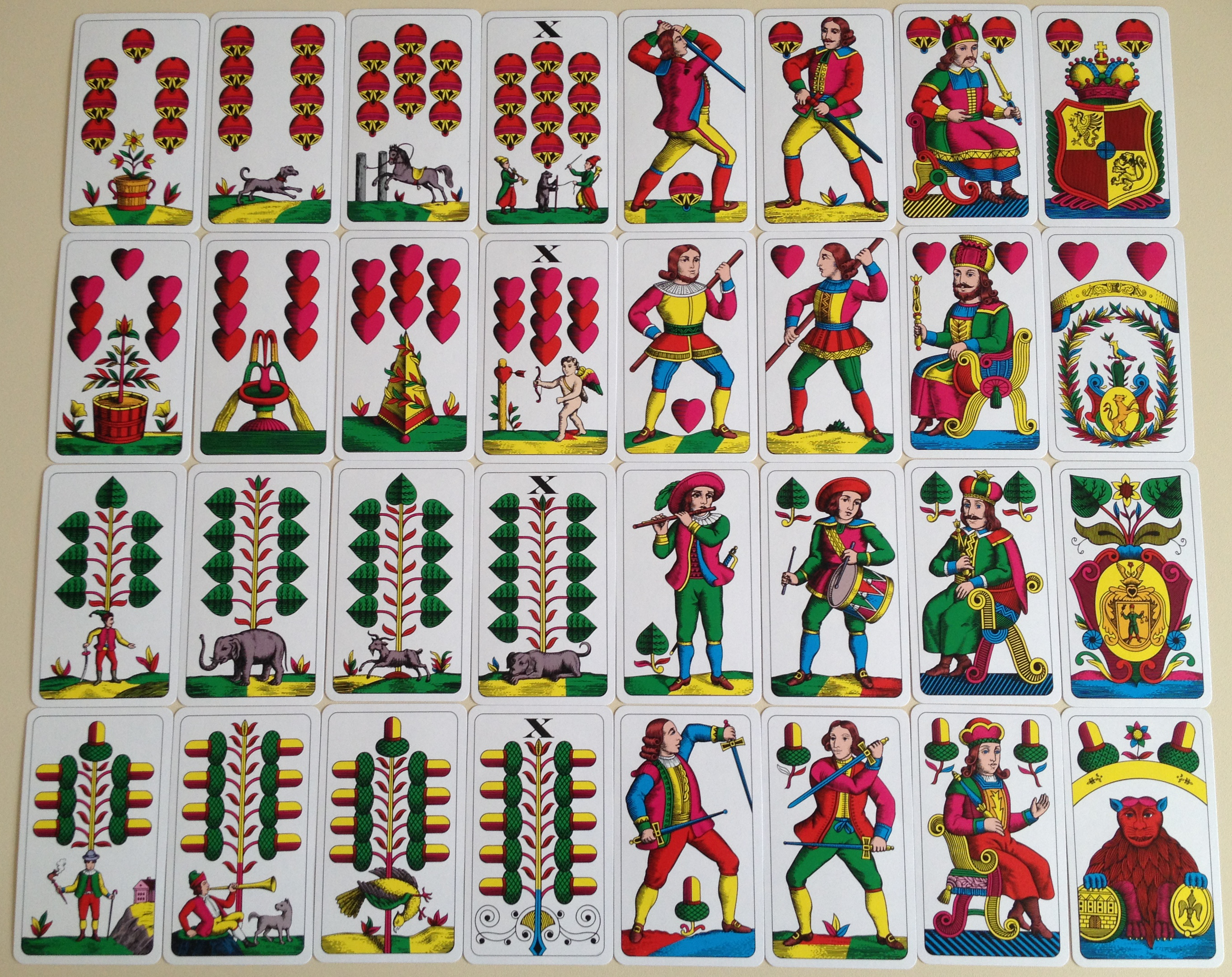
Let us have typical Bohemian pack of 32 playing cards. We randomly choose 2 cards from this pack and consider random vector $(X,Y)^T$ where $X$ gives us the number of hearts and $Y$ the number of kings. My original goal is to determine probability distribution of this vector. So I created a $3 \times 3$ table with columns $0, 1, 2$ (meaning the number of kings drawn) and same with lines.
Now I struggle with filling the table as I need to calculate probabilities of specific cards drawn. I have tried the following:
$P(X=0, Y=0)=\frac {21}{32} \cdot \frac {20}{31}$, because I can pick $21$ cards from $32$ that are neither kings or hearts and in the second pick it's the same but with one card less.
$P(X=0,Y=1)=1-(\frac{7}{32} \cdot \frac{21}{31})$, because I can pick $7$ hearts (king of hearts not included) in the first pick and $21$ non-hearts and non-kings in the second pick. But we need a complement to this.
$P(X=0,Y=2)=\frac{3}{32} \cdot \frac{2}{31}$, because I can pick $3$ non-king of hearts and then $2$.
$P(X=1,Y=0)=\frac{7}{32} \cdot \frac{21}{31}$ , because it is complement to the second $P$.
$P(X=1,Y=1)=1-(\frac {21}{32} \cdot \frac {20}{31})$, because it is complement to the first $P$.
$P(X=2,Y=0)=\frac{7}{32} \cdot \frac{6}{32}$, because in the first pick I can pick from $7$ heart cards (king of hearts not included) and the same in the second pick but with one card less.
Other cells in the table are $0$.
Now I know these calculations are not correct as the sum of sums of each line must be equal to $1$.
Please correct me or point me the correct way. Thank you.

You haven't considered some of the cases and the calculation is wrong in some of the cases you have considered. Also remember that in some of the cases the order can be reversed to get the same probability again leading us to directly multiply by $2$ most of the times. Let's start at the beginning
$P(X=0, Y=0)=\frac {21\choose2}{32\choose2} = \frac {21}{32} \cdot \frac {20}{31}$ - This one is correct
$P(X=0,Y=1)= \frac{2\cdot3\cdot21}{32\cdot31}$ - $3$ ways to choose a king, $21$ ways to select a non heart, non king card and $2$ since the order can be reversed with the same probability
$P(X=0,Y=2)=\frac{3}{32} \cdot \frac{2}{31}$ - $3\choose2$ ways to choose 2 non heart kings
$P(X=1,Y=0)=\frac{2\cdot7\cdot21}{32\cdot31}$ - $7$ ways to choose a non king heart, $21$ ways to choose from a non heart non king card and $2$ since the order can be reversed with the same probability
$P(X=1,Y=1)=\frac {21\cdot2 + 2\cdot7\cdot3}{32\cdot31}$ - This one's a bit complicated. First let's say you select the king of hearts. Then $21$ ways to select the other card. Next, we assume king of hearts is not selected. Then, $7$ ways to choose a heart's card (excluding the king) and $3$ ways to choose a non heart's king card. The $2$ is present in both cases since the order can be reversed with the same probability
$P(X=1,Y=2)=\frac{2\cdot3}{32\cdot31}$ - Since both cards are kings, one of the cards has to be the king of hearts. The second king can be chosen from the $3$ left in $3$ ways and $2$ since the order can be reversed with the same probability
$P(X=2,Y=0)=\frac{7}{32} \cdot \frac{6}{31}$ - $7\choose2$ ways to select $2$ hearts card from $8-1 = 7$ (excluding hearts king as $0$ kings)
$P(X=2,Y=1)=\frac{2\cdot7}{32\cdot31}$ - Since two hearts cards are there and one is king, then $1$ card has to be the king of hearts. The second card can be selected from the remaining $7$ cards in $7$ ways and $2$ since the order can be reversed with the same probability
Summing all of them will give you $1$. Please ask if you need more clarifications in any case.