After successfully rectifying Fermat's spiral and the lituus, I set myself a new challenge: find the arc length of the Lissajous curve that forms the basis for the logo of the Australian Broadcasting Corporation.
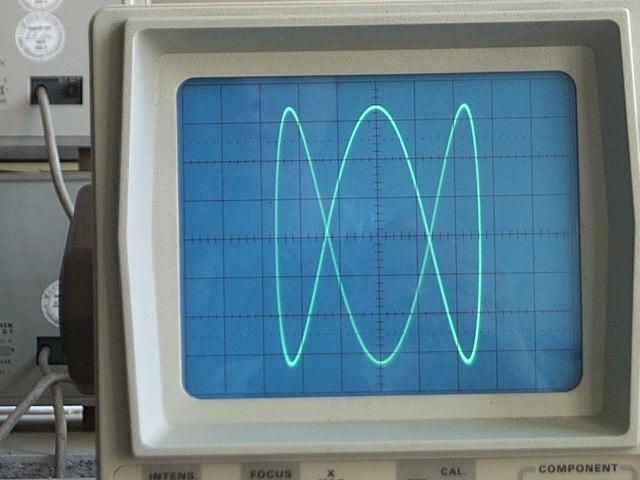
The specific curve I want to rectify is $(\sin t,\cos3t)$ for $0\le t\le2\pi$. The arc length integral is $$\int_0^{2\pi}\sqrt{\cos^2t+(3\sin3t)^2}\,dt=13.065417\dots$$ After some substitutions I got my integral to $$2\int_{-1}^1\sqrt{\frac{18t^3-14t-5}{t^2-1}}\,dt\tag1$$ But this is ultimately a fifth-degree polynomial under the square root, which means that elliptic integrals will not work. However, seeing this fellow answer using the hypergeometric $_2F_1$ makes me believe that there is a solution to my problem using hypergeometric functions (not necessarily $_2F_1$).
Does the integral $(1)$ have a solution in terms of (generalised) hypergeometric functions? More generally, can integrals $\int R(t,\sqrt{P(t)})\,dt$, where $R$ is any rational function and $P$ any polynomial, be solved using hypergeometrics?
Of course, if all else fails, there's numerical integration.

This is not an answer.
Using $t=\sin ^{-1}(x)$, I end with the ugly $$I=4\int_0^1 \sqrt{\frac{144 x^6-216 x^4+80 x^2+1}{1-x^2} }\,dx$$ Now $x=\sqrt y$ $$I=2\int_0^1 \sqrt{\frac{144 y^3-216 y^2+80 y+1}{y\,(1-y)} }\,dy$$ I really do not see what I could do with this.
Using the inverse symbolic calculator (have a look here), the closest result seems to be
$$10 \times \, _1F_1\left(\frac{3}{50};\frac{11}{36};1\right)$$ but the difference is $5.04\times 10^{-8}$