This is what I initially thought.
1.If $div F = 0$
2.no compression is allowed in the field
3.velocity must be uniform at all points of the vector field at a specific time
I knew that this statement must have been incorrect some how but I didn't know why. I thought the reasoning that links 2. and 3. must have been wrong somehow so I tried to show it in a 1 dimensional vector field.
Showing the idea in 1D

$P_{av}=\text{velocity of particle a} \\ P_{ax}=\text{initial position of particle a} \\l=\text{distance between particle a and b}$
If no compression is allowed then
$l(t)=\text{constant}
\\ l_{t=0}=P_{ax}-P_{bx}
\\l_{t=2}=(P_{ax}+2P_{av})-(P_{bx}+P_{bv})
\\l_{t=0}=l_{t=2}
\\l_{t=0}-l_{t=2} = 0
\\P_{ax}-P_{bx} - (P_{ax}+2P_{av})-(P_{bx}+P_{bv}) =0
\\P_{av}(t)-P_{bv}(t) =0
$
This means that particles on this vector field must have the same velocity at a specific time as I had initially thought.
Then I thought, it might be the second dimension that allow them to have different speed.
Showing the idea in 2D

$l^2(t)=\text{constant}
\\ l^2_{t=0}=(P_{ax}-P_{bx})^2+(P_{ay}-P_{by})^2
\\l_{t=1}=((P_{ax}-P_{vx})-(P_{bx}-P_{bvx}))^2+((P_{ay}-P_{vy})-(P_{by}-P_{bvy}))^2
\\l_{t=0}=l_{t=1}
\\l_{t=0}-l_{t=1} = 0
\\(P_{ax}-P_{bx})^2+(P_{ay}-P_{by})^2-[((P_{ax}-P_{vx})-(P_{bx}-P_{bvx}))^2+((P_{ay}-P_{vy})-(P_{by}-P_{bvy}))^2]=0
\\\text{I ran the above equation into mathematica and found the solutions to be}
\\P_{bx} = P_{ax}, P_{by} = P_{ay}, P_{bvx} = -P_{avx}, P_{bvy} = -P_{avy}
$
I didn't know how to interpret the solutions. When particle a and b start at same position and move in an opposite direction the field is never compressed? This kind of sound like a non-sense to me.
During the modelling I thought, I could interpret this as a grid chain where knots represent particle and the chain represent l.
If I try to squish them together in vertical axis, they must try to spread in horizontal axis to prevent the chain from slacking. But this analogy can't be used since it does not take in count of distance between diagonal particles.
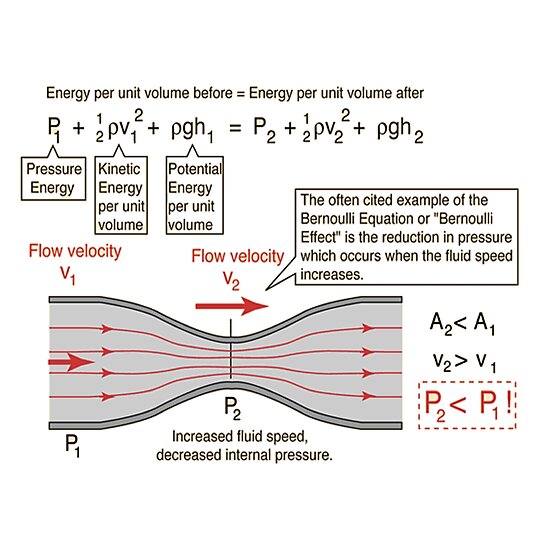
Also isn't a grid chain with infinitely dense knots be like a paper? And I can't really stretch paper around. So my grid chain analogy fails since I know that water flow rate depends on the volume in the system like in a hydrofoil.

What I would like to know
How do I interpret the solutions from 2d idea?
Why does my grid chain analogy fail to represent vector field with divergence of 0?